
Search Website

Western’s Mel Goodale Named World’s Top Scholar in Visual Neuroscience
Western’s Mel Goodale Named World’s Top Scholar in Visual Neuroscience

Western’s Mel Goodale Named World’s Top Scholar in Visual Neuroscience
Sarah O’Flanagan, January 20, 2025
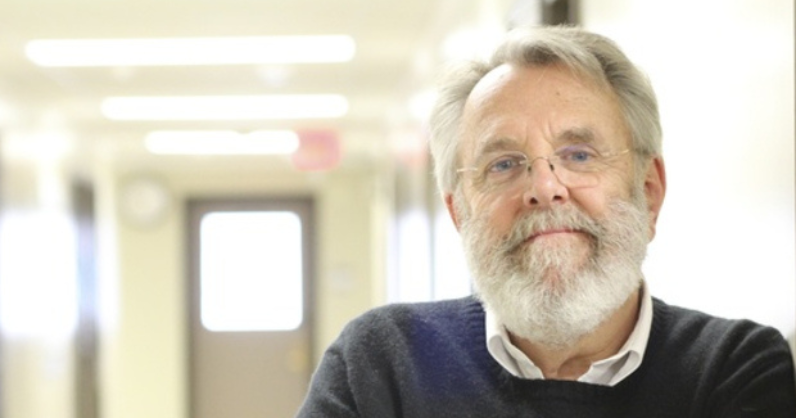
The Western Institute for Neuroscience (WIN) is celebrating a landmark achievement in global research recognition. Dr. Melvyn (Mel) Goodale, Distinguished University Professor and co-founder of Western’s Centre for Brain & Mind (formerly known as the Brain & Mind Institute), has been ranked #1 worldwide in the specialty of Visual System by ScholarGPS, a leading scholarly analytics platform.
ScholarGPS evaluates more than 30 million scholars and 120,000 institutions across 14 fields and 177 disciplines, normalized by specialty. Unlike reputation-based rankings, ScholarGPS uses a fully quantitative approach, combining productivity (publication count), impact (citations), and quality (h-index), demonstrating Dr. Goodale’s outstanding contributions and scholarly influence.
A Career of Groundbreaking Research
Dr. Goodale’s top ranking in the Lifetime category reflects decades of pioneering work in visual neuroscience. He is internationally recognized for co-developing the dual visual-stream hypothesis, which revolutionized our understanding of how the brain processes vision for perception and action. This theory has influenced scholarly fields from psychology and neuroscience to clinical rehabilitation, shaping how scientists and clinicians approach brain injury and visual disorders.
In addition to being one of the key founders of the Western Institute for Neuroscience, Goodale also played a key role in founding Western’s Centre for Brain & Mind, which is regarded as a global leader in cognitive neuroscience research. Under his leadership, the institute attracted top scholars and advanced cutting-edge studies in perception, action, consciousness, and much more.
His research themes include groundbreaking neuropsychological case studies, such as work with patient DF, which provided critical evidence for separate visual pathways. He has also been at the forefront of using neuroimaging techniques like functional Magnetic Resonance Imaging (fMRI) to explore how the brain integrates vision and motor control. His insights have influenced clinical practices for stroke rehabilitation and inspired innovations in fields such as robotics and artificial intelligence.
His publications, including “Two visual systems re-viewed” and “The Visual Brain in Action”, remain foundational in cognitive neuroscience. Google Scholar lists nearly 63,000 citations and an h-index of 108, underscoring his global impact.
Academic Journey and Honors
Born in England and raised in Canada, Goodale earned his PhD in Psychology at Western in 1969 before returning as faculty in 1977. Over his career, he has received numerous honors, including Fellow of the Royal Society of Canada and the Royal Society (UK), the Donald O. Hebb Distinguished Contribution Award, the Hellmuth Prize for Scientific Achievement, and the Sir Frederic Bartlett Lecture Prize.
He has also served in editorial roles for leading journals and contributed to major scientific organizations worldwide.
Significance
Being ranked #1 globally for lifetime impact in the Visual System specialty places Dr. Goodale at the summit of a field that includes tens of thousands of researchers. It is a rare and prestigious milestone that underscores his exceptional productivity, global influence, and enduring legacy.
“This recognition underscores the impact of Dr. Goodale’s work on the international stage. It’s a testament to Western’s commitment to advancing knowledge that changes lives.” Shawn Whitehead, Director of Western Institute for Neuroscience
Looking Ahead
The Neuroscience community at Western University continues to build on Dr. Goodale’s vision, fostering interdisciplinary research that bridges neuroscience, psychology, and technology. This work influences clinical treatments for brain injury and visual disorders and drives innovation in artificial intelligence and robotics. As Western expands its global collaborations, it remains at the forefront of discoveries that shape how we understand the human mind.